Why The Cost of Living Crisis Isn’t Yours To Fix
Estimated read time: 11 minutes
I came across a conversation in a piano teachers’ Facebook group recently that stopped me in my tracks.
Teachers were sharing their reasons for keeping their rates low and not increasing them year on year, and the cost of living crisis was being cited as the main justification. One teacher mentioned they hadn’t raised their rates in seven years and were perfectly happy with that decision.
I had to sit with that for a moment, because I understand the impulse entirely. And I also know how much damage it does in the background.
This piece is about that tension: the very real guilt and fear that keeps so many music teachers from charging what they are worth, and why the cost of living crisis, however real it is, was never yours to absorb.
➡️If you’d like to listen rather than read, I covered this in depth on episode 2 of my podcast The Victoria Clark Show for Music Teachers.
The Cost of Staying Frozen
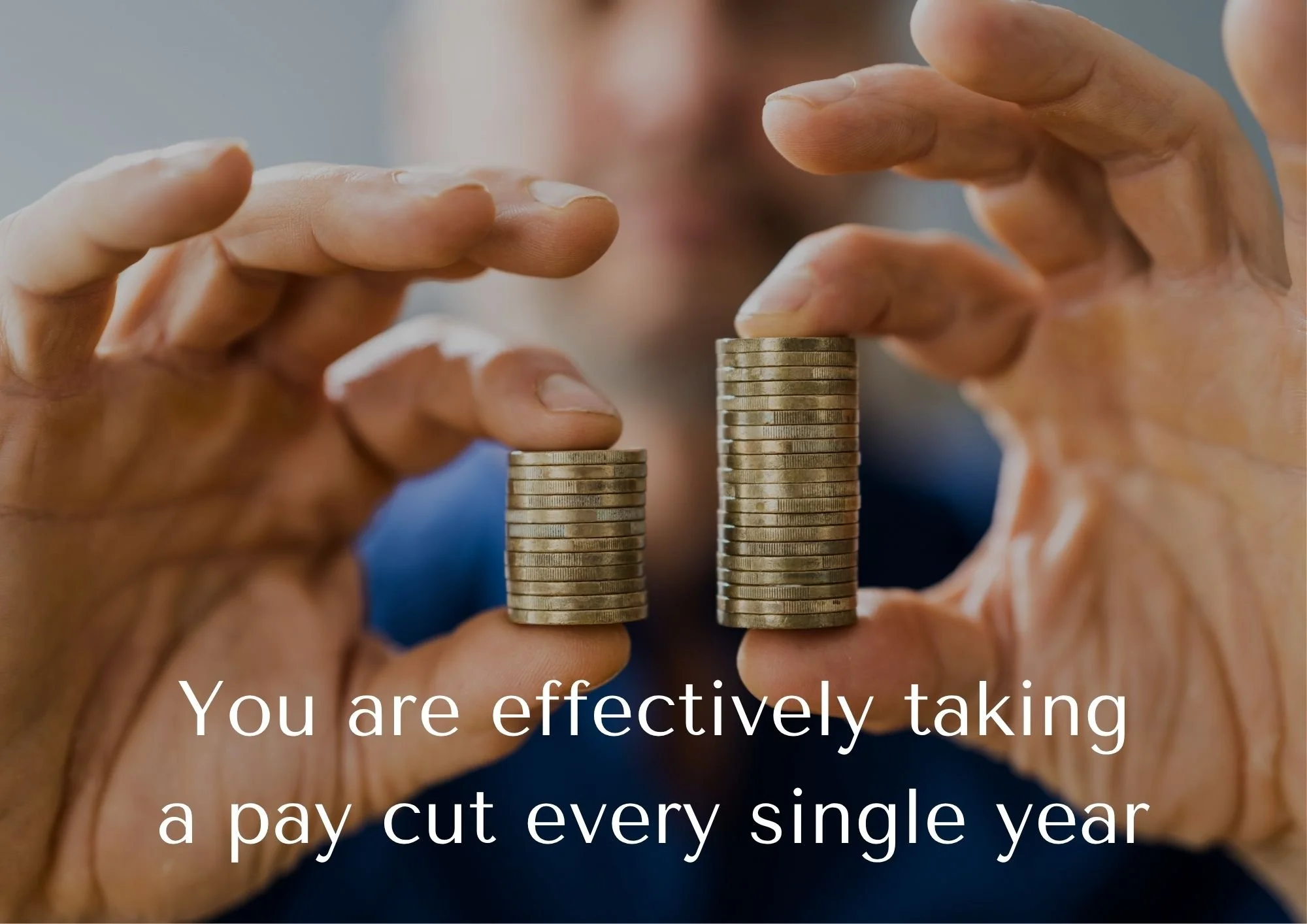
When you keep your rates fixed while everything around you gets more expensive, you are effectively taking a pay cut every single year. That is not a dramatic way of framing it; it is just what inflation means in practice.
Your gas and electricity bills have gone up. Your home insurance has gone up. The cost of piano tuning, professional development courses, and your weekly food shop have all gone up. That litre of Tesco olive oil I used to pick up without thinking about it doubled in price at one point, and don’t get me started on the shrinkflation of butter… We all felt it.
But if your lesson rate has stayed the same while your costs have risen, your spending power has decreased. You are earning less in real terms than you were last year, and the year before that, and the year before that. Over time, that leads to teaching later in the evening to compensate, taking on more students than feels comfortable, and the slow creep towards burnout.
None of that helps your students. None of it helps you.
There is also something subtler happening underneath the financial pressure. When you consistently undercharge for your time, it affects how you perceive your own skills. It is a kind of self-fulfilling prophecy: the less you charge, the less you may value what you offer, and the more exhausted and resentful you can begin to feel, even without fully realising why. That quiet resentment does find its way into lessons eventually.
Why We Do It Anyway
Most music teachers I speak to are not unaware that they are undercharging. They know. But there are a few deeply held beliefs that keep the rates frozen, and it is worth naming them honestly.

Guilt about charging for something we love. We are genuinely fortunate to do this work. It brings joy to us and to our students, and that can make charging for it feel almost dishonest, as if it should not cost much because it does not feel like hard work in the way other jobs do. But loving your work does not mean it should be free or cheap. It means you are good at it, and good at it in a way that is hard to replicate.
The belief that music should be accessible to everyone. This is a lovely instinct, and I have felt it too. But when the only person funding that access is you, it is not really a community value; it is a personal financial sacrifice. There is no arts funding or government scheme covering the difference. It is just coming out of your pocket, your time, and your energy.
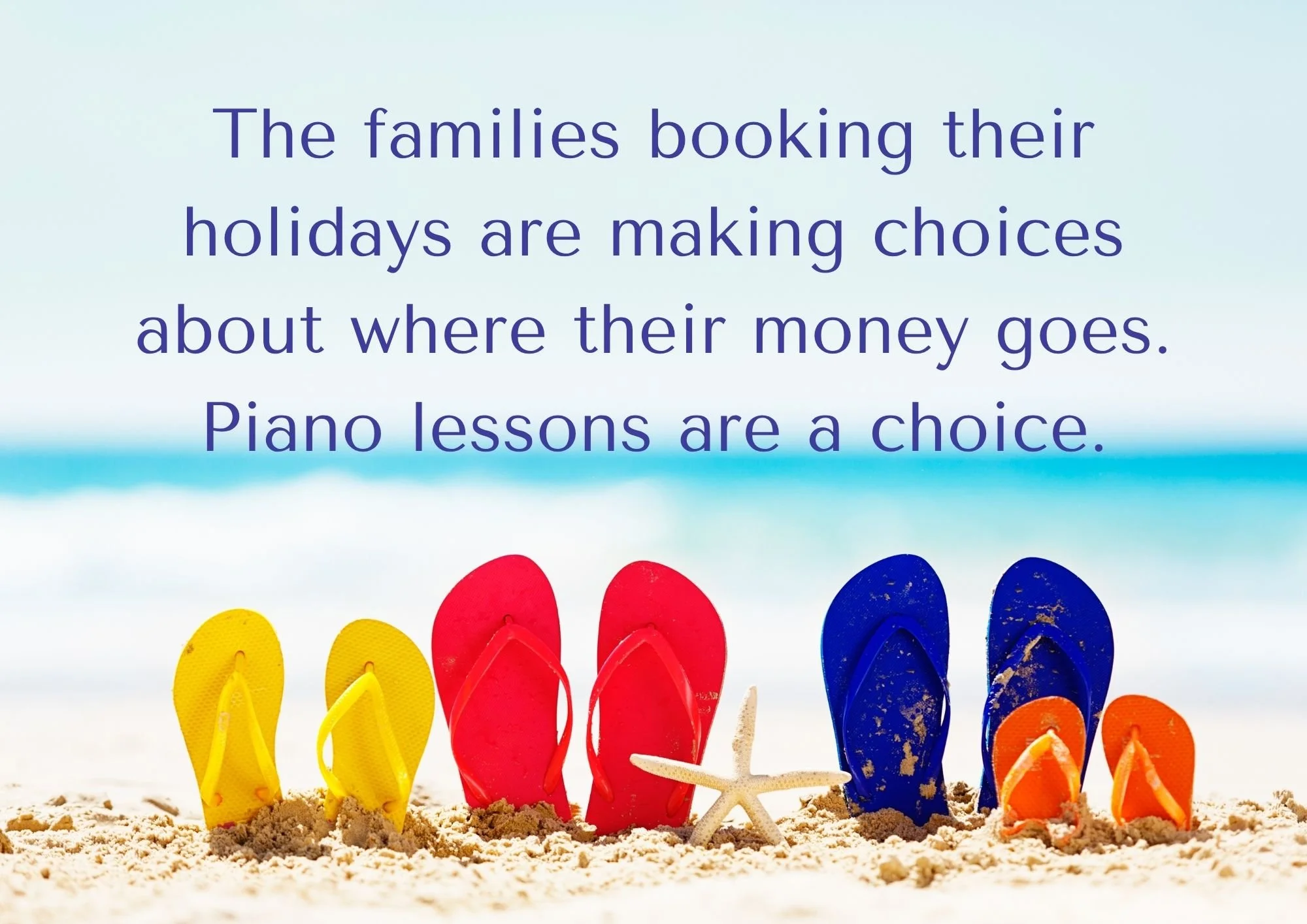
The assumption that your students cannot afford more. This is the one I want to spend a moment on, because it is nearly always an assumption rather than a fact. Most of us do not have in-depth conversations about our student families’ finances. We look at them, make a judgement, and decide on their behalf that they cannot stretch any further. But the same families booking their half-term holidays, coming back from Florida, talking about the new games console they got for Christmas: they are making choices about where their money goes. Piano lessons are a choice their family has made, and it is a choice they value. You cannot know what someone can and cannot afford by looking at them, and assuming you do is not kindness; it is guessing.
If you genuinely know that a specific family is struggling financially, that is a private conversation to have with them. It is not a reason to freeze your rates for every single family in your studio.
The Fear Underneath The Guilt
Guilt tends to be the emotion we talk about, but fear is usually sitting right beneath it. Specifically, the fear of losing students when you raise your rates.
I had that fear. I felt it clearly every single time I put my rates up, especially the first time I introduced an annual increase after switching to monthly billing. I deliberated over the wording of that email for ages. I thought carefully about how to frame the increase, how much it equated to per lesson, how to make it feel as manageable as possible. I sent it convinced that someone, maybe several people, would decide it was too much.
Not one person responded with any concern. No pushback, no cancellations. Just acknowledgement and a signed agreement for the following year.

This is genuinely the most common outcome for teachers who raise their rates thoughtfully. Most families who already value what you do, do not walk away over a modest annual increase. The relationship matters to them. The progress their child has made matters to them. Finding someone new, starting again, going through the settling-in period: that is not something most families want to do over a relatively small price difference.
Lesson fees are not the same as choosing between two identical tins of beans. They are not purely a price comparison. You are not interchangeable with every other teacher in your area.
What Your Rate Actually Signals
There is a widely held assumption amongst music teachers that lower prices signal kindness and accessibility. In practice, they often signal something else entirely.
Think about how you choose a tradesperson. If you need an electrician for something important, you probably do not go straight for the cheapest quote. You wonder what the low price means: less experience, less care, a corner cut somewhere. Price is a signal whether we intend it or not.

If prospective students are regularly telling you that you are the cheapest they have found, or expressing surprise at how low your rates are, it is worth asking what impression that creates. Very few families are thinking: “How kind of her to sacrifice her income for us.” Most are thinking: “I wonder why she charges so little…?”
Teachers with waiting lists are rarely the cheapest in their area. They are the most valued.
At the time of writing, I currently charge nearly £47 an hour and have just over fifty people on my waiting list. That is not because I market myself as a premium option or position myself as an elite teacher. It is because I show up consistently, I care about my students’ progress, and I run my studio professionally. That includes charging a fair rate for the work I do.
On Socioeconomic Location
One response I received to my original social media post made the argument that it is easy to talk about raising rates if you happen to live in a more affluent area, and that teachers in less well-off communities simply cannot expect the same from their families.
I found that comment genuinely difficult to sit with, because if that belief is widespread, and I think it is, then there are teachers all over the country keeping their rates artificially low based on a set of assumptions about the people around them.
Your ideal students are not defined by their household income. They are defined by how much they value piano lessons. A family with a modest income who prioritises lessons for their child is making exactly the same commitment as a more affluent family. They have decided this matters to them enough to spend money on it. That decision belongs to them, not to you.
You are not helping your community by teaching yourself into burnout. Running a financially sustainable studio is how you stay in it for the long haul.
How To Start, If You’ve Been Frozen For A While
If the thought of raising your rates feels overwhelming, you do not have to make a large jump all at once. A small increase is significantly better than no increase, and better still than leaving it for another year while everything else rises around you.
A few things that helped me:
Consider linking increases to the academic year so the timing feels natural and expected, rather than a sudden announcement mid-term.
Remember to communicate the increase in both your monthly/ termly fees as well as per-lesson cost when communicating with families, for transparency. It’s easier to understand like for like and reassuring for parents needing to confirm the increase is manageable.
Write the email before you feel ready. Deliberate less than you think you need to. You will almost certainly not lose the students you are afraid of losing.
And if you are thinking about moving to monthly billing at the same time, doing both together makes sense: the billing change itself resets expectations in a way that makes the rate adjustment easier to introduce. This is exactly the change I made in my studio and I have never looked back.
Final Thoughts
Raising your rates in line with inflation every year is not an act of selfishness or unkindness. It is how a professional business operates, and it is how you stay the kind of teacher your students really need you to be.
The cost of living crisis is real. It has been hard on a lot of people. But it is not something you were ever asked to absorb on behalf of your student families, and absorbing it has not protected them. It has just made your situation harder.
You are allowed to earn a living from this work you love. That is not something to feel guilty about.
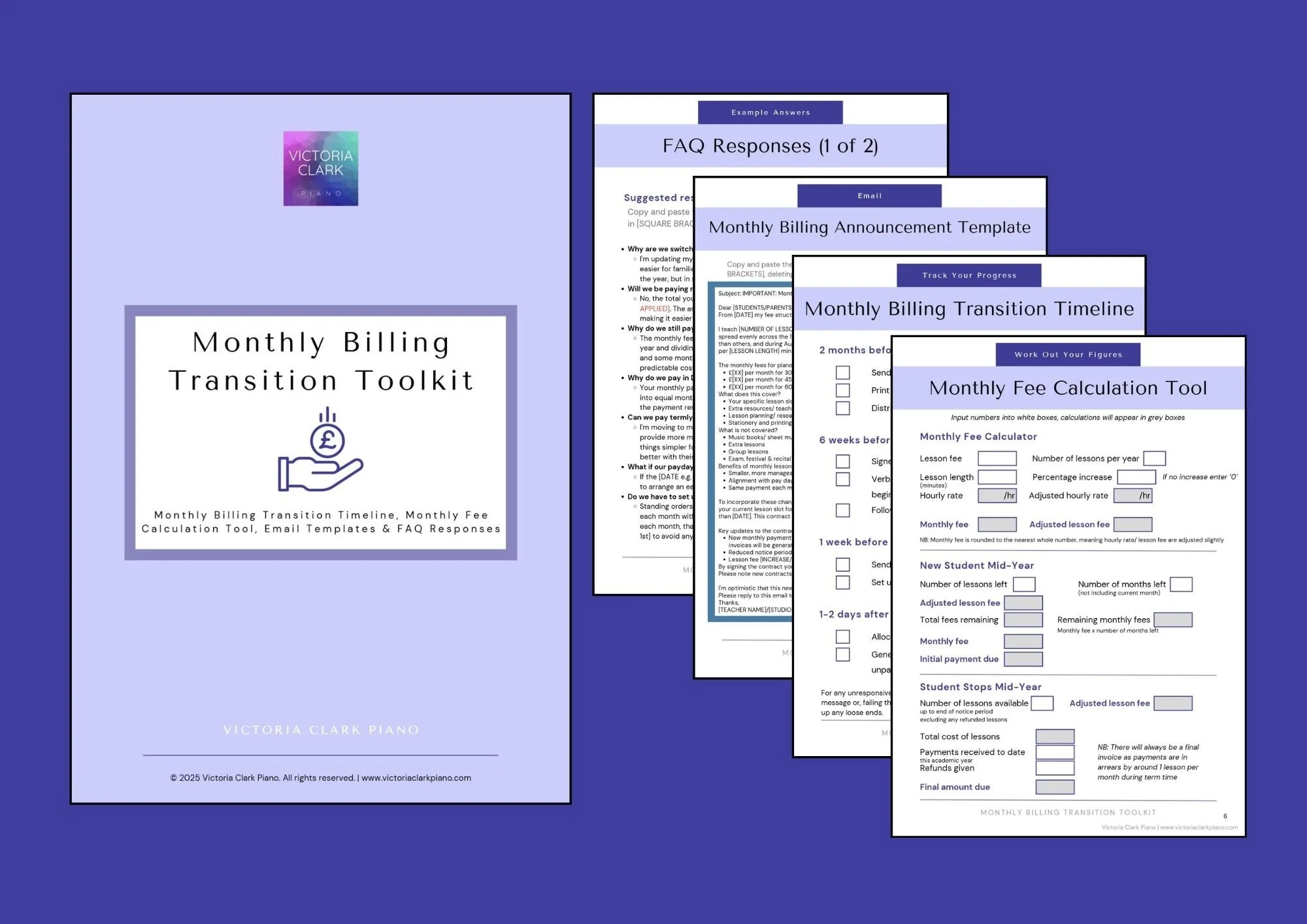
If you want to look at what a rate increase would actually mean for your income, and how to move to monthly billing at the same time, my Monthly Billing Transition Toolkit walks you through the whole process. It includes a calculation tool where you can input a percentage increase and it does the maths for you, along with email templates and FAQ responses to help you communicate the change to families. It’s only £12 and you can access an instant download, to get it all sorted in one afternoon.